

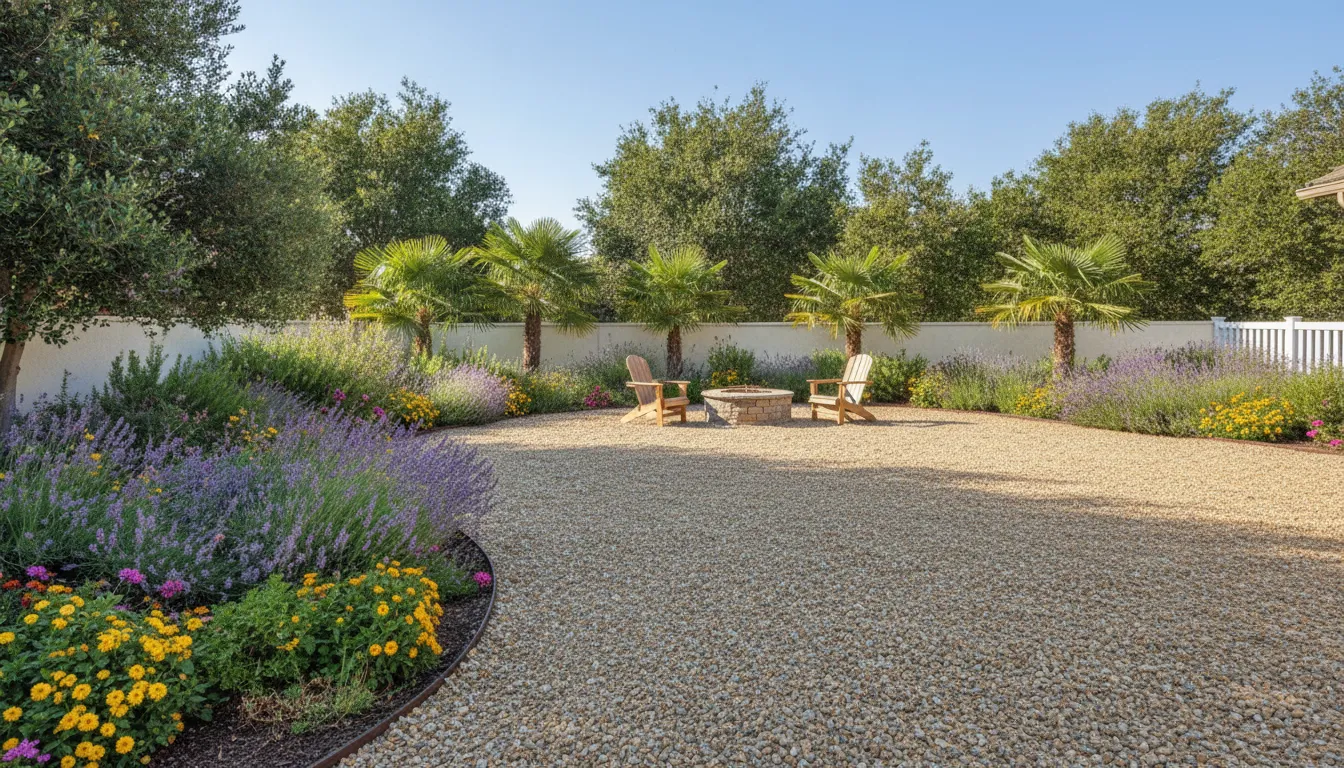
A gravel patio can be comfortable, attractive, and practical, but the layers below the visible stone determine how well it performs. The question of whether to use landscape fabric for gravel patio projects does not have one answer for every property. Fabric may help separate soil from aggregate and reduce the movement of fine soil into the gravel, yet it cannot correct poor drainage, unstable soil, inadequate base preparation, or missing edge restraint. The right decision depends on the ground, the gravel system, the patio’s slope, and how the space will be used.
Discuss your gravel patio plan with California Landscaping DP
What Does Landscape Fabric Do Under a Gravel Patio?
Landscape fabric, sometimes called geotextile or filter fabric, is a permeable sheet installed between soil and an aggregate layer. Its role is usually separation and filtration, not structural support. It can help keep the native soil from mixing rapidly into the gravel while still allowing water to move through when the selected product and installation are appropriate.
That distinction matters. A patio needs a stable, well-drained system that can support people, furniture, and normal weather exposure. Fabric does not replace excavation, a suitable base, compaction, grading, or an edge restraint. It also is not a waterproof membrane, a substitute for a drainage outlet, or a guarantee that weeds will never appear.
Under some gravel patios, a contractor may recommend a properly rated geotextile over prepared subgrade before placing the base and surface aggregate. In other situations, the design may call for a different separation layer, no fabric in a particular zone, or a more engineered base system. The recommendation should follow the site assessment rather than the product label alone.
When Can Fabric Be Useful?
Fabric is most useful when the project needs a durable separation between soil and aggregate and the site can be prepared correctly first. The following conditions may support considering it.
When the native soil is fine, soft, or prone to mixing
Clay-rich or silty soil can migrate into open spaces in gravel, especially when the ground stays wet or the surface receives repeated foot traffic. Once fine soil fills those voids, the patio may drain more slowly and become softer or uneven. A separation fabric may reduce that mixing at the soil-to-aggregate boundary.
Fabric is not a cure for a saturated or weak subgrade. If the soil pumps, ruts, or holds water under light pressure, the contractor may need to address excavation, replacement material, grading, or drainage before deciding how to layer the patio.
When the patio crosses a transition between different materials
A gravel patio may meet lawn, planting beds, compacted base, existing paving, or a path. At these transitions, soil and aggregate can move into each other over time. A well-planned separator can help keep the layers distinct, while a visible or concealed edge restraint helps keep the gravel within the intended footprint.
The fabric should not be allowed to become a loose flap at the perimeter. It needs to be cut, overlapped, pinned, and covered according to the product and site design. Exposed material can catch tools, degrade in sunlight, and detract from the finished edge.
When the design includes a properly prepared aggregate system
Fabric can be part of a layered system that includes prepared subgrade, a compacted base, and a selected surface gravel. The layers must work together. A patio made from only a thin layer of decorative stone over fabric may look finished at first but can shift, rut, and expose the fabric under use.
For a larger patio or a site with difficult soil, a contractor may recommend a geotextile selected for the expected conditions rather than a lightweight garden weed barrier. Product strength, permeability, puncture resistance, and the aggregate system all affect whether the material is appropriate.
When Is Landscape Fabric the Wrong Fix?
Fabric can be useful in a carefully designed assembly, but it should not be used to hide unresolved site problems. A contractor should pause and investigate when any of these conditions are present.
Standing water or runoff is already a problem
If water collects where the patio is planned, installing fabric and gravel over the area will not create a drainage plan. The finished surface needs a deliberate fall, and runoff must be directed to a safe location without sending water toward a building, basement, neighboring property, or erosion-prone planting bed. Depending on the site, the solution may involve regrading, a drain, a swale, a permeable design, or another approach.
Drainage should be considered before selecting fabric. A sheet that is described as permeable is not the same thing as a complete drainage system. The soil below it, the base material above it, the slope, and the outlet all influence how water behaves.
The subgrade is unstable or contaminated with organic material
Roots, mulch, topsoil, and decomposing plant material are not a dependable foundation for a patio. They can settle as they break down, leaving low spots in the gravel. Fabric placed over an unprepared surface may simply follow that settlement. Remove unsuitable material, shape the subgrade, and compact the appropriate layers before treating fabric as part of the plan.
The goal is only to eliminate every weed
Landscape fabric can slow some weed growth from below, but it cannot stop seeds that land in the gravel from germinating. Windblown soil, leaves, dust, and organic debris accumulate at the surface, creating opportunities for weeds. Plant roots can also enter from the edge or from nearby beds.
Weed management starts with site preparation and continues through maintenance. Choose the gravel and edge detail with cleanup in mind, remove organic debris, and address weeds early. If planting pockets or groundcovers are part of the design, the fabric layout must also account for those areas instead of treating the entire patio as a sealed zone.
How Drainage Changes the Fabric Decision
Water is one of the most important reasons not to make a material decision in isolation. A gravel surface may allow rainfall to pass through, but the layers beneath it still need enough capacity and slope to receive and move that water. The property’s existing grades, soil texture, roof runoff, irrigation, and nearby hardscape all matter.
Check the finished slope and low points
Before construction, map where water currently flows and identify low points, downspouts, irrigation lines, gates, steps, and nearby foundations. The patio should meet adjacent surfaces at a sensible elevation and should not create a basin where water collects. A contractor can use the planned finished grade to evaluate whether the patio needs a drain, a change in shape, or a different surface system.
Separate infiltration from uncontrolled runoff
Permeable gravel is not automatically a successful stormwater solution. Water still has to move into suitable soil or toward an approved outlet. If the underlying soil drains slowly, infiltration may be limited. If the patio sits on a slope, runoff can carry fines and gravel downslope unless the edge and grading details are designed for it.
Protect nearby planting and structures
Patio drainage should not wash soil into planting beds or concentrate water against walls. It should also account for irrigation overspray and the way water reaches the area from roofs, walkways, and neighboring grades. Fabric may help with soil separation, but grading and edge details control most of the visible movement of water and gravel.
What Should Go Under a Gravel Patio?
The exact assembly depends on the soil, use, material, and design. A typical planning sequence may include the following steps, but it should be adjusted to the property rather than treated as a universal specification.
- Mark the footprint and finished elevation. Include seating, steps, planting beds, gates, utilities, and the route for moving materials.
- Remove unsuitable surface material. Excavate vegetation, organic soil, loose debris, and any material that will settle unpredictably.
- Shape and compact the subgrade. Establish the intended slope and address soft areas before adding the aggregate system.
- Install drainage or separation components when needed. This may include a geotextile, a drain, a swale, or another site-specific detail. The product and placement should match the design.
- Place and compact the base. A structural aggregate base may be needed below the visible gravel, especially where the patio will receive frequent use or the soil is variable.
- Install the edge restraint. Edging, a rigid border, or another restraint helps keep the gravel in place and preserves the patio shape.
- Spread the surface gravel evenly. Select a material that suits walking comfort, appearance, drainage, and maintenance. Avoid using the surface stone to compensate for an uneven base.
The number and thickness of layers should be determined after reviewing the site. A small, lightly used garden sitting area may not need the same system as a large patio with heavy furniture, a sloping grade, or frequent foot traffic.
How Edge Restraint Supports a Gravel Patio
Even a well-prepared gravel patio can lose shape if the perimeter is not contained. Foot traffic, sweeping, lawn equipment, rain, and routine maintenance gradually move loose stone. A restraint keeps the edge defined and helps prevent gravel from migrating into turf, planting beds, walkways, and drains.
Possible edge details include metal, plastic, stone, concrete, brick, or a transition to an existing rigid surface. The best choice depends on the look, grade, adjacent materials, mowing needs, and expected maintenance. The restraint should be anchored securely and set at an elevation that contains the gravel without creating a trip hazard or blocking intended drainage.
For more background on material and installation choices, see this landscape edging guide. The patio itself may need a different edge detail from a planting bed, so use general guidance as a starting point and confirm the conditions at the property.
How to Choose the Right Fabric and Gravel Combination
Start with the job the patio must perform. A decorative gravel surface, a compacted decomposed-granite area, and a patio built over a structural aggregate base may require different materials and maintenance expectations. The surface stone’s size, shape, depth, and movement underfoot all affect comfort and stability.
- Use a product intended for the soil and aggregate conditions. Lightweight weed-barrier fabric is not automatically the right geotextile for a patio assembly.
- Confirm permeability and separation needs. The material should support the intended water movement while limiting unwanted soil migration.
- Match gravel to the use. Consider whether people will walk barefoot, move chairs, roll carts, or use the area for dining and entertaining.
- Plan overlaps and penetrations. Fabric around drains, posts, steps, planting areas, and utilities needs careful detailing so it does not bunch or leave gaps.
- Account for maintenance. Choose an edge and surface that can be raked, replenished, and cleaned without exposing the fabric.
A simple measurement tool can help estimate surface material, but it cannot determine the correct patio assembly. Use the landscape rock calculator guide to organize area and depth estimates, then confirm the order and installation plan with the material supplier or contractor.
| Layer | Where it can fit | What to watch |
|---|---|---|
| Woven geotextile. | Separation under clean gravel on a firm, shaped base. | Dusty fines can clog it. Keep the sheet covered. |
| Nonwoven geotextile. | A thicker filter where soil and stone need cushioning. | Thin gravel or an open edge can tear it. |
| Solid plastic. | Almost never under a gravel patio. | It blocks water. A wet base can follow. |
This table is a planning comparison, not a product prescription. California Landscaping DP should match the layer to the soil, slope, and use seen on site.
What a Contractor Should Inspect Before Recommending Fabric
A useful consultation should cover more than whether a fabric roll fits under the gravel. Ask the contractor to review:
- Existing soil type, soft spots, roots, organic material, and evidence of settlement.
- Current drainage, roof runoff, irrigation overspray, low points, slopes, and the planned finished elevation.
- Access for excavation equipment, compactors, gravel delivery, and material movement.
- Utilities, outdoor lighting, irrigation lines, steps, retaining features, and nearby foundations.
- Patio use, furniture, accessibility needs, pets, children, and how often the surface will be maintained.
- Base material, fabric or separator type, gravel type, edge restraint, and the intended layer sequence.
- How the design will handle future repairs, replenishment, weed control, and drainage maintenance.
Request a scope that identifies what will be excavated, what will be compacted, which materials are included, and how the edges and drainage will be finished. This makes it easier to compare options without assuming that every gravel patio needs the same construction method.
Should You Use Landscape Fabric for Your Gravel Patio?
Landscape fabric can be a reasonable part of a gravel patio system when it is selected for the site and installed over a prepared subgrade. It may help separate soil from aggregate, especially where fine soil would otherwise migrate into the base. It is not, however, a universal recommendation. Poor drainage, unstable soil, missing base preparation, and uncontained edges can still cause a patio to settle, rut, shed gravel, or develop weeds.
The safest decision is to evaluate the entire assembly: finished grade, drainage path, subgrade, base, separator, surface gravel, edge restraint, and maintenance plan. California Landscaping DP can help property owners discuss a patio or broader outdoor improvement project through its landscaping and outdoor construction services.
Ready to review the site conditions, materials, and project scope? Contact California Landscaping DP to start a project conversation.
Frequently Asked Questions
Is landscape fabric necessary under a gravel patio?
No. The need depends on soil, drainage, the aggregate design, and how the patio will be used. Fabric may be helpful for separation in some systems, but it is not a required layer for every gravel patio and does not replace a stable base or proper grading.
Does landscape fabric stop weeds under gravel?
It may reduce weeds that would otherwise grow up from below, but it cannot stop seeds that arrive in the gravel or organic debris at the surface. Good preparation, appropriate edging, and routine maintenance remain important.
Will fabric prevent a gravel patio from sinking?
Not by itself. Settlement usually relates to subgrade preparation, soil conditions, drainage, compaction, layer thickness, or the movement of the surface material. Fabric can help separate layers, but the complete base and grading plan determine stability.
Can gravel go directly on top of landscape fabric?
It can be part of some designs, but a thin layer of gravel over fabric is not automatically a durable patio. The contractor should determine whether the site needs excavation, a compacted base, drainage work, edge restraint, or a different separator before the surface stone is placed.
What is better than landscape fabric for a gravel patio?
There is no single better material for every property. A geotextile, a different base detail, or no fabric may be appropriate depending on the soil and drainage. Compare the complete system rather than choosing one product without reviewing the site.


