

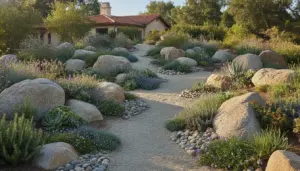
 A decorative rock garden can look simple, but a lasting result depends on decisions made before the first stone is placed. Slope, soil, sun exposure, drainage, plant growth, and access all affect how the space functions and how much attention it will need over time.
Discuss your decorative rock garden project with California Landscaping DP.
In brief: Decorative rock garden landscaping services can coordinate site planning, rock placement, drainage-aware preparation, compatible plant selection, installation, and ongoing maintenance for California properties. The right scope depends on the site and the level of support you want, rather than on a fixed material list.
California Landscaping DP offers related garden design, plant selection, rock work, hardscaping, irrigation, and maintenance services. Understanding what those pieces involve makes it easier to evaluate a project, identify site-specific concerns, and decide where professional planning or installation may help.
What Do Decorative Rock Garden Landscaping Services Include?
Decorative rock garden landscaping services are about coordinating an outdoor space, not simply delivering a pile of stones. A well-planned project connects the garden’s layout, rock placement, soil preparation, plant choices, and future care. The right scope depends on the property, the intended use of the space, and how much ongoing maintenance the owner wants to manage.
Planning the layout and materials
Planning establishes where the garden belongs and how it relates to paths, patios, existing planting beds, and the rest of the landscape. It can include choosing the visual role of the rock, defining planting areas, and considering how people will move around the space. California Landscaping DP lists garden design, rock work, hardscaping, and related outdoor improvements among its services. You can review the broader landscaping services to see how these elements fit within a larger project.
Preparing the site and placing rock
Installation is more than setting stones on the surface. The site may need preparation so the layout works with existing grades, soil conditions, and drainage patterns. Rock placement should support the intended appearance while keeping the space practical to access and maintain. Drainage deserves attention because standing water can create problems for plants and for the surrounding landscape. Any drainage guidance should be tailored to the actual site rather than treated as a universal installation formula.
Selecting plants and planning care
Plant selection completes the design. A service may address the scale, spacing, and growing needs of plants that will share space with decorative rock, along with irrigation considerations where relevant. Ongoing garden maintenance can then help keep plants, stones, and surrounding areas in workable condition as the landscape changes. This coordinated approach gives property owners a clearer path from concept to installation and care, while leaving room to discuss the site’s specific needs before work begins.
How Do You Plan a Rock Garden for a California Property?
A successful rock garden starts with the property, not with a pile of stone. Planning should account for how the space is seen and used, how water moves through it, and which plants can establish in the conditions that already exist. A natural slope or terrace can be a suitable setting, but a level area may also work when the layout and drainage fit the site.
- Review the site and its purpose. Walk the area at different times of day and note sightlines from windows, entries, patios, and paths. Decide whether the garden will be a focal point, a border, a transition between hardscape and planting, or a space that visitors move beside. Check access for people, tools, and materials before finalizing the footprint. This early review helps keep the design practical rather than treating the garden as an isolated decorative feature.
- Study the slope or create a clear terrace. A natural slope or terrace can give rocks and plants a more convincing setting. On a sloped property, consider how soil and water may move between stones, and avoid placing the garden where runoff would collect against a structure or frequently used route. A terrace can create a defined planting area, but its edges and transitions should be planned with the rest of the landscape.
- Map sun exposure and temperature. Observe which parts receive full sun, filtered light, or shade, and how those patterns change across the year. High and low temperatures also affect plant choices and establishment. These observations are more useful than choosing plants from appearance alone. For California properties, the plants for decorative rock gardens should be matched to the actual exposure and conditions of the site.
- Assess the soil and drainage. Identify whether the soil is sandy, loamy, or heavy clay. Most plants suited to rock gardens need well-drained soil, while poorly draining clay can leave roots exposed to excess water. General horticultural guidance recommends considering soil type, sun exposure, temperature, and plant establishment together when making watering and planting decisions. See guidance from Colorado State University Extension and UC Agriculture and Natural Resources. Any soil improvement should respond to the observed site rather than follow a fixed recipe.
- Plan for establishment and access. Newly planted areas need to be observed as plants settle in. Watering needs depend on the plant, soil, exposure, and how established the planting is, so do not assume every part of the garden should be treated identically. Leave enough room to inspect plants, remove weeds, and maintain nearby paths. A manageable layout is easier to evaluate and adjust as the garden matures.
Which Rocks Work Best for Garden Design?
The best rock choice supports the scale of the property, the shape of the planting areas, and the way people move through the garden. Start with the overall composition rather than choosing individual stones in isolation. A small courtyard can feel crowded when oversized rocks dominate it, while a broad slope may need larger pieces to create a visible structure. The goal is a deliberate relationship between stone, soil, plants, paths, and nearby features.
Visual consistency usually matters more than collecting many contrasting materials. One geological type can give the garden a unified appearance, while carefully varied sizes keep it from looking flat. The Colorado State University Extension guide recommends using rocks from one geological type and incorporating several large rocks into an effective rock garden. Review the source guidance on rock-garden design when comparing possible arrangements.
Rock choices by design role
| Design role | What to consider | Planning note |
|---|---|---|
| Large structural rocks | Use scale, visibility, and placement to create a clear focal structure without overwhelming the planting. | Several well-positioned larger rocks can feel more intentional than many scattered pieces. |
| Smaller stones as mulch | Choose smaller stones that relate visually to the main rocks in color, texture, or general character. | Use the smaller, similar material to connect planting pockets and reduce a patchwork appearance. |
| Planting pockets | Leave varied spaces between stones for selected plants, soil, and access for upkeep. | Plan pockets around mature plant size rather than filling every open space immediately. |
| Paths and edges | Coordinate the visual weight of nearby rocks with walking routes, patios, and transitions to other surfaces. | Discuss patio and hardscape design options as part of the wider garden layout. |
Placement also affects whether the garden looks natural. Rocks should relate to one another instead of appearing randomly dropped across the site. Their arrangement can define planting pockets, support visual balance, and help separate a planted area from a path or patio. Avoid making every stone the same size or spacing every piece at equal intervals. At the same time, too many unrelated textures can make the design feel busy.
For a California property, the final selection should also be considered alongside sun, soil, drainage, planting needs, and ongoing access. California Landscaping DP can discuss rock work, garden design, plant selection, paths, and related hardscaping as part of a broader landscape plan. Material availability and the right arrangement depend on the specific site, so a design conversation is more useful than assuming one rock type fits every garden.
How Should Rock Placement and Drainage Work Together?
Rock placement should support both the visual structure of the garden and the movement of water across the site. A stable arrangement begins with observing the slope, identifying where runoff travels, and considering whether water already collects in low areas. Rocks can be positioned to help limit soil erosion between stones, while still leaving useful planting pockets rather than creating a solid barrier that redirects water unpredictably. This is planning guidance for evaluating a landscape, not a guarantee or a description of California Landscaping DP’s documented installation method.
For stability, an academic guideline from Colorado State University Extension advises setting a rock into the ground so at least one-third is buried. That proportion can be a useful starting point when thinking about how a large stone will sit. But the appropriate depth and preparation depend on the rock, soil, slope, access, and surrounding design. Rocks should also look settled into the landscape, with their natural grain and orientation considered instead of appearing randomly placed.
Plan for runoff and erosion
On a sloped garden, placement can help slow or guide soil movement between rocks. It should not be treated as a substitute for a site-specific drainage assessment. Avoid positioning stones where they could concentrate runoff toward a foundation, walkway, neighboring property, or newly planted pocket. A terrace, swale, edge, or other drainage feature may need to be considered alongside the rock layout. The right solution depends on the existing grades and how water behaves during heavy rainfall.
Match the soil to the planting plan
Most plants used in rock gardens prefer well-drained soil. Colorado State University Extension notes that incorporating organic matter into heavier clay soils can improve texture and provide better drainage. That does not mean adding material automatically solves every drainage problem. Heavy clay may continue to hold excess water, especially where the grade is flat or compacted. Soil type, sun exposure, plant establishment, and local site conditions all affect how a garden should be managed.
Standing water deserves particular attention in California planting plans. UC Agriculture and Natural Resources explains that many California native plants tolerate dry summer soils but may not tolerate standing water. Excess water can contribute to root rot and limit oxygen reaching roots, with poorly draining clay soils presenting a particular concern. If the proposed rock garden has persistent puddling, a steep grade, compacted soil, or runoff moving toward structures, ask a qualified landscaping professional to assess the site before selecting rocks and plants.
How Do You Choose Plants for a Decorative Rock Garden?
Plant selection should support the scale, texture, and purpose of the rock garden rather than compete with the stone. Start by looking for low-growing forms and plants with a clumping habit. These shapes can sit naturally among rocks, leave portions of the stone visible, and create distinct planting pockets without making the space feel crowded. Perennials are common choices for rock gardens, although some annuals may also fit the design and seasonal plan.
Match plant form to the rock layout
Review the rock placement before deciding how many plants and what sizes are appropriate. A broad stone may need a lower plant nearby, while a tighter group of smaller rocks may call for a compact clump that fills a pocket without spilling across a path. Planting areas do not need to be identical. Varying the pocket size and repeating selected forms can make the composition feel more natural than placing one different plant beside every rock.
Repetition is useful for both appearance and organization. The Colorado State University Extension guide recommends using a variety of species while repeating some species several times to create a natural-looking garden. It also advises against overplanting. Leave enough visual space for the rocks, allow mature growth to be considered, and avoid filling every open area simply because soil is available. The result should have a clear relationship between the stone structure and the planting.
Consider sun, soil, and establishment
California conditions vary by site, so watering should not be assigned from a plant label alone. The appropriate schedule depends on the plants, soil type, sun exposure, temperature range, and how well established the plants are. UC Agriculture and Natural Resources identifies these conditions as important when evaluating care for California native plants. Observing how native plants grow in comparable settings can also inform the choices made for a home garden.
Native plants may be considered where they suit the site and design. Many California native plants are adapted to dry summer soils, but that does not mean every native plant belongs in every rock garden. Some do not tolerate standing water, especially where heavy clay drains poorly. Excess water can contribute to root rot and limit oxygen around the roots. Check the soil and drainage before finalizing the plant list, then coordinate irrigation and establishment care with those conditions. Avoid promising water savings simply because a garden includes drought-adapted plants.
California Landscaping DP’s plant selection service can be part of a broader planning discussion for a coordinated planting and rock layout. A thoughtful plan connects plant form, spacing, sun, soil, drainage, and future maintenance before installation begins.
What Maintenance Does a Rock Garden Need?
A rock garden is not maintenance-free. Its care is usually shaped by the plants, soil, drainage, and amount of open ground between stones. Start with a footprint that remains practical to inspect and reach. Colorado State University Extension advises sizing a rock garden so it is no larger than can be easily maintained, and identifies weed control as its biggest maintenance problem. Read the extension guidance on rock garden plants for additional planting considerations.
Keep weeds and growth under control
Check planting pockets and the spaces around rocks regularly, especially while young plants are becoming established. Remove weeds before their roots become difficult to separate from desirable plants. Avoid overplanting simply to fill every open area. Low-growing, clumping forms can help preserve the intended structure, while repeated plant groupings can keep the design visually coherent as it matures. If a plant begins spreading into paths, crowding a neighboring plant, or hiding a stone feature, seasonal thinning or repositioning may be appropriate.
Adjust watering as conditions change
Do not treat every rock garden as if it has one fixed watering schedule. Watering needs depend on the plant types, soil, sun exposure, temperatures, and how well-established the plants are. Many rock-garden plants need low to moderate watering, but California conditions still require observation. Some California native plants tolerate dry summer soil yet do not tolerate standing water. Poorly draining clay can leave roots saturated, which may contribute to root damage. Watch how quickly water disappears after irrigation or rain, and adjust care based on what the plants and soil show.
Inspect stones, roots, and seasonal changes
Walk through the garden during different seasons. Look for stones that have shifted, soil that has washed away, exposed roots, clogged irrigation, and plants that are declining or growing beyond their space. These observations can reveal a drainage or stability concern before it becomes a larger repair. A garden maintenance plan can then address weeding, pruning, watering adjustments, and small corrections in a coordinated way. California Landscaping DP lists garden maintenance among its services, so property owners can consider ongoing support when the design requires more regular attention than they can provide.
When Should You Hire Decorative Rock Garden Landscaping Services?
Hiring help makes sense when a decorative rock garden involves more than spreading stone over an open area. Use the checklist below to decide whether your project would benefit from coordinated planning, installation, and care.
The grade or drainage needs careful review
Consider professional planning when the garden sits on a slope, beside a foundation, near a walkway, or where water already collects. Changes in grade can affect how people move through the space and how water travels across it. A landscaping professional can help you discuss the site conditions, intended use, drainage concerns, and the limits of the project before materials or plants are selected. This is especially important when the work may involve related hardscaping or retaining-wall considerations. Do not assume that decorative rock alone will solve an existing drainage problem.
You need rocks and plants to work as one design
A rock garden is easier to live with when the stone layout, plant choices, irrigation needs, paths, and surrounding features are considered together. Professional assistance can be useful if you are unsure how to balance large rocks with smaller stones. Leave enough room for plants to mature, or select forms that suit the available sun and moisture. California Landscaping DP documents garden design, plant selection, irrigation, rock work, and hardscaping among its services. You can review its broader landscaping services when comparing the kinds of support your project may require.
Access and placement are difficult
Large or irregular rocks can be difficult to move through narrow gates, around existing plants, or across finished surfaces. If access is restricted, the placement plan should be settled before installation begins. Think about equipment access, protection of nearby features, walking routes, and whether the final arrangement will be practical to maintain. A site discussion can also clarify which parts of the project are decorative rock work and which involve paths, patios, edging, or other hardscape features.
The installation scope extends beyond the stone
Hire help when the project includes site preparation, soil work, plant installation, irrigation adjustments, multiple hardscape elements, or a substantial change to an existing garden. A coordinated scope reduces the risk of treating each task as a separate material purchase. Ask which planning, installation, plant selection, irrigation, rock work, and maintenance services are relevant to the site, without assuming that a standard decorative-rock package is available.
You want a plan for ongoing care
Rock gardens still need observation and maintenance. Plants grow, weeds appear, irrigation needs can change, and stones may require attention after weather or nearby work. If you do not want to manage those tasks alone, discuss an ongoing garden-care plan alongside the initial installation. When you are ready to explain the site and the type of support you are considering, you can discuss a landscaping project with California Landscaping DP. The FAQ below covers common questions about planning and maintaining a decorative rock garden.
Contact California Landscaping DP to discuss your rock garden landscaping needs.
Frequently Asked Questions
What is the average cost of landscape rock?
There is no single average that applies to every California project. Material type, rock size, delivery distance, site access, preparation, drainage work, placement, and the amount of labor can all affect the total. A useful evaluation should separate the rock material from site preparation, installation, planting, and future maintenance. Review the complete scope rather than comparing a material-only figure with a full-service project.
How much does 100 square feet of rock cost?
The cost for 100 square feet depends on the selected rock, the depth needed. Access for delivery, and whether the area needs grading, weed control, edging, drainage improvements, or plant installation. Square footage alone is not enough to produce a reliable project figure. A site review can clarify the material quantity and the related preparation and installation work without relying on an invented dollar amount.
Which is cheaper, rock or mulch?
The answer depends on the material, installation conditions, and maintenance expectations. Rock may involve more preparation and delivery considerations, while mulch may require periodic replenishment as it breaks down. Compare the complete life-cycle scope, including soil preparation, plant compatibility, watering, weed control, and upkeep. The right choice should support the site design and drainage plan, not just the initial material cost.
What is the least expensive way to landscape?
A lower-cost approach typically begins with a manageable design, appropriate plant selection, and clear priorities for installation. Avoiding unnecessary rework can matter as much as choosing a material. Evaluate drainage, access, existing soil, plant water needs, and the amount of maintenance you can manage before selecting rock, mulch, or other improvements. A phased plan may also help organize work around the most important site needs.
Ready to Discuss Your Rock Garden Project?
A decorative rock garden benefits from decisions that fit the property, including rock placement, plant selection, drainage, and ongoing care. California Landscaping DP can discuss how these pieces may fit together for your outdoor space. To explore your ideas and next steps, contact California Landscaping DP about your landscaping project.


