

A gray film, rust speck, or oil mark on a patio is easy to attack with the strongest cleaner in the garage. That is also how a finish gets etched, streaked, or stripped. If you want to know how to clean concrete patio surfaces without guessing, start with the slab you have, not a product that worked somewhere else.
Request a landscaping consultation if the patio needs more than a wash, or if you want the surface checked before you scrub.
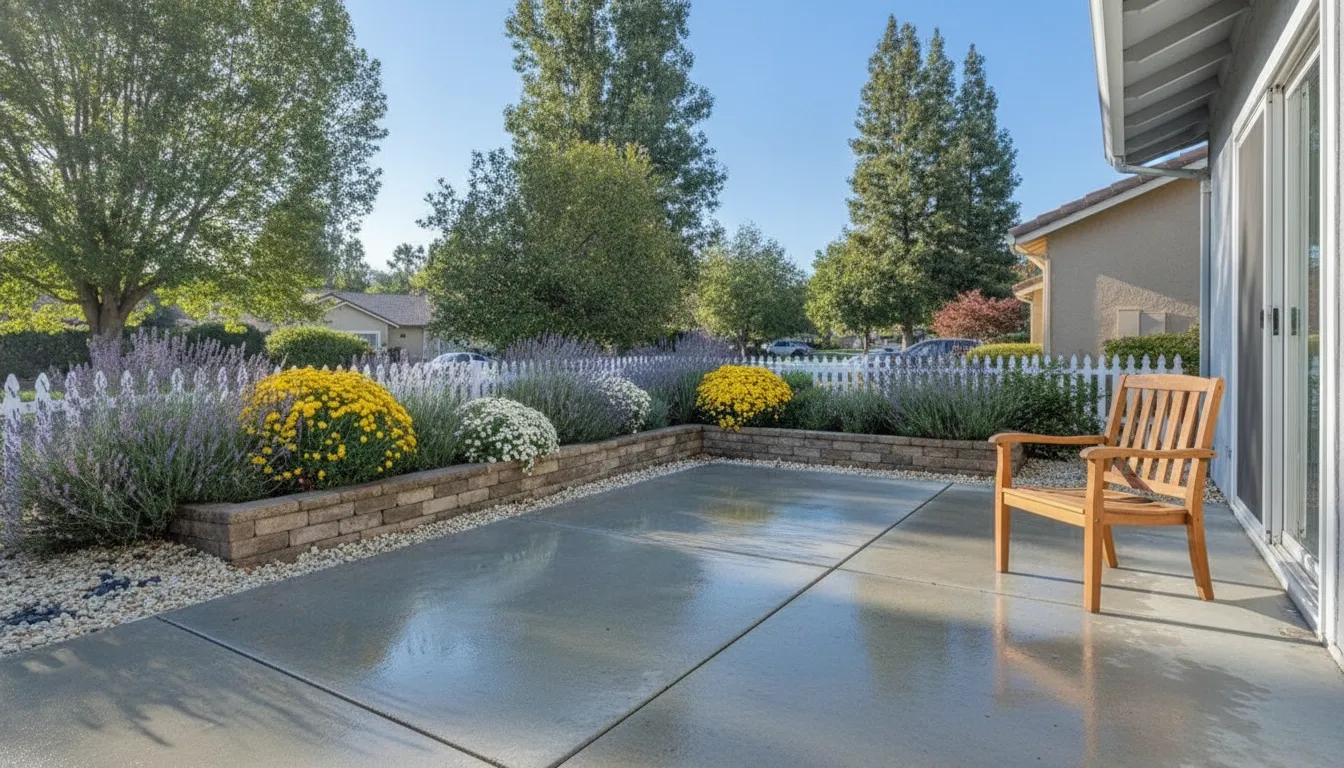
For a broader look at related outdoor planning and improvement services, review the landscaping services overview before deciding what your patio needs.
This guide is a homeowner checklist. It covers clearing, a small test, a rinse-and-scrub routine, stain categories, and the signs that mean stop and ask a contractor. It does not name one chemical, pressure, or result as right for every patio. Sealer choice and crack repair belong in other conversations. So do design and new construction.
How to Clean Concrete Patio Surfaces Without Guessing
Concrete looks tough, but the top layer can be thin, colored, stamped, or sealed. A method that lifts dirt on plain broom-finished concrete can dull a decorative finish or leave wand marks. The useful question is not “what is strongest?” It is “what is this surface, and what is the smallest step that might work?”
Work in this order:
- Clear furniture, pots, grills, and loose debris.
- Look for cracks, flaking, a shiny sealer, or a colored finish.
- Test any cleaner on a small hidden spot and wait until it dries.
- Rinse, then scrub with a mild mix before you try anything stronger.
- Stop if the test spot changes color, turns rough, or stays streaked.
Dry the test spot before you judge it. Wet concrete always looks darker, so a color change is easy to miss while the slab is still damp. Give the spot time in shade if you can. Sun can bake a cleaner onto the surface before you see the result.
Keep plants, soil, and storm drains in mind. Do not let wash water run into beds or the street if you are using anything beyond plain water. The U.S. Environmental Protection Agency’s Safer Choice product list is a starting point for cleaners made for outdoor use. A listed product is not a promise that it suits your patio finish.
Clear the Patio and Check the Surface First
Move chairs, tables, rugs, and planters off the slab, then sweep or blow off leaves, grit, and soil, because grit left under a brush acts like sandpaper. If you see weeds in joints, pull or cut them before you wash so you are not grinding stems into the concrete.
Then look, do not scrub yet. Note open cracks, chipped edges, hollow sounds, or areas that already flake. Cleaning will not fix those. A wash can also push water into a crack and make a small problem look worse after it dries.
What kind of finish do you have?
Plain gray concrete with a light broom texture is the most forgiving surface to wash by hand. Stamped or stained concrete, and any slab with a clear sealer, needs a gentler start. If you are not sure the patio was sealed, treat it as if it might be. A shiny film, water that beads, or a color that looks coated are clues, not proof.
Also note what sits next to the slab. Wood decking, metal furniture feet, and planting beds can all react to runoff. If the patio meets a deck, keep wash water from soaking the wood joints. A decking installation guide covers how wood and concrete meet, which matters when you are washing the edge between them.
Use a Surface-Safe Cleaning Checklist
Start with water. Wet the patio, scrub with a stiff brush that will not shed metal bristles, and rinse. Many film stains are only dust and pollen, and they move with water alone. Work from the high side toward a drain or the yard edge so dirty water does not dry back onto clean concrete.
If water is not enough, mix a small amount of a mild dish soap into a bucket of water. Scrub a section, let it sit only as long as the label allows, and rinse fully. Do not let soapy water dry in the sun. Dried soap is a new film, and it shows up as dull streaks the next day.
A pressure washer is optional rather than the default, because high pressure can cut broom texture, etch a sealer, or leave stripes that never blend. If you use one, keep the wand moving, use a wide fan tip, and stay farther from the slab than you think you need. Test a corner first. If the test looks rougher than the rest, stop.
Skip muriatic acid, undiluted bleach mixes, and any product sold for heavy rust or oil unless the label matches your finish and you have already passed a spot test. Strong acid can eat the paste at the surface. What looks clean that afternoon can look pitted a week later. When a label says the product is not for sealed or colored concrete, believe it.
Match the Stain Before You Choose a Cleaner
Not every mark is dirt. The color and the feel tell you more than the product aisle does. Organic stains, rust, oil, and mineral film do not respond to the same wash. Treating all of them with one jug is how people damage a patio that only needed a rinse.
Concrete patio stain clues and a gentler first step.| What you see | Likely type | Gentler first step | Stop and reassess if |
|---|---|---|---|
| Green, black, or slippery film. | Algae or mildew in shade. | Rinse, then mild soap and a brush. | The film returns in days or the slab stays slick. |
| Brown or orange speck. | Rust from metal or irrigation. | Find the metal source, then test a rust cleaner. | The spot test lightens the concrete around the stain. |
| Dark greasy patch. | Oil, food, or grill drip. | Blot fresh oil, then a degreaser labeled for concrete. | The stain has soaked in and scrubbing only spreads it. |
| White chalky haze. | Mineral salts or hard-water film. | Dry brush, then water; avoid acid until tested. | Scrubbing makes the haze larger or rougher. |
| Even gray dirt. | Soil, pollen, and foot traffic. | Sweep, rinse, and soap only where needed. | One pass leaves stripes or a rough patch. |
Rust often starts at furniture feet, planter rings, or fertilizer, and moving the metal may matter more than the cleaner. Oil fresh from a grill can be blotted with a dry absorbent before any liquid touches it. Old oil that has soaked in may never lift fully, and aggressive scrubbing can make a halo around the spot.
White haze is common where irrigation overspray hits the slab. Sprinkler water in many California yards is mineral-heavy. A garden irrigation installation page is the place to think about spray that lands on concrete, not about which jug to buy. Aim heads away from the patio before you spend a weekend on a film the sprinklers will rebuild.
Paint, tire marks, and efflorescence that keeps returning are poor DIY targets. They can need a product that also strips sealer or color. That is a finish decision, not a Saturday scrub.
Know When a Wash Is the Wrong Job
Stop cleaning and ask a contractor to look when you see signs like these.
- The spot test changes color outside the stain, or leaves a rough patch.
- Cracks are wide, growing, or paired with a sunken or rocking section.
- The surface flakes, dusts, or sounds hollow underfoot.
- You cannot tell whether the patio is sealed, stained, or painted.
- Water ponds on the slab after a normal rain, or runs toward the house.
- A stain covers most of the patio, or it returned right after the last wash.
Those signs can mean the finish, the drainage, or the slab itself needs a plan. A wash will not level a settled section or stop water that has nowhere to go. Drainage and slope are design questions. They belong with the people who can see the yard, not with a stronger nozzle.
California Landscaping DP plans and builds patios, walkways, and other hardscape as part of landscape work in California, with Fairfield among the stated SEO target areas. A consultation is a way to talk through what you are seeing. It is not a promise that a wash, a sealer, or a rebuild will produce a specific look. Scope depends on the property.
If the patio is part of a larger outdoor plan, the decking and patio service page describes that work in general terms. For how a new concrete surface is chosen and placed, see the custom concrete work guide. Neither page is a cleaning manual, and this article is not a build guide.
Bring photos of the stain, the test spot after it dries, and any crack or low area. Also note whether sprinklers hit the slab and whether furniture has rusted in place. That context is more useful than a product name.
Keep the Patio Cleaner After the First Wash
Once the slab looks even, small habits do more than another deep clean. Sweep grit before it is ground in. Move metal feet onto pads if rust keeps marking the same spots. Cover the grill zone or wipe food spills before they set. In a dry California summer, dust and irrigation film build faster than mildew, so a rinse may be enough for long stretches.
Shade, leaf litter, and pet messes are the other repeat offenders. A corner that stays damp will grow film again even if the rest of the patio stays gray. Trim plants that hold moisture on the slab, and rinse pet areas sooner rather than letting them bake on.
Do not seal a patio just because it is clean, since sealer can trap moisture or fail in sheets if the slab is not ready, and the right product depends on the finish. If you want that discussed, ask during a consultation instead of buying a jug to match a photo online. Recoating over a failed sealer is a different job from a wash.
Garden beds at the patio edge also affect how often you clean. Soil, mulch, and fertilizer track onto the slab. A simple edge or a slightly raised border can cut that traffic. The landscaping services overview is where to see garden care, hardscaping, and related outdoor work together, if the patio problem is really a yard problem.
After the first careful wash, set a light routine instead of waiting for the slab to look neglected. A monthly sweep in the dry season, a rinse after pollen or a dusty wind, and a quick check of metal furniture feet will usually do more than a second deep clean. If a mark returns in the same place, treat that as a source problem. A planter, a sprinkler head, or a grill drip is easier to move than to bleach out of the paste.
Write down what you used and how the test spot looked the next day. That note helps if you later ask for a consultation, and it also stops you from repeating a mix that dulled one corner. Cleaning is maintenance, not a substitute for a patio that slopes the wrong way, a sealer that is failing, or concrete that has already started to break up.
Homeowners often compare a patio wash with a driveway wash, but the two surfaces do not always share a finish or a traffic pattern. A patio may hold outdoor rugs, planter saucers, and food spills, while a driveway mainly sees tires and oil. Use the same caution on both, and judge each surface on its own test spot rather than copying a method from a video of a different slab.
Frequently Asked Questions
Can I pressure wash every concrete patio?
No. Some plain slabs tolerate a careful wash with a wide fan tip. Stamped, stained, painted, or sealed patios can etch or streak. Test a corner, and stop if the texture changes.
Will vinegar or baking soda clean a concrete patio?
They are common household suggestions, not a universal fix. Vinegar is an acid and can affect some finishes. Test a hidden spot, rinse well, and do not assume a home mix is gentler than a labeled cleaner.
How do I clean a concrete patio by hand?
Clear debris, wet the slab, scrub with a mild soap solution and a non-metal brush, then rinse before the soap dries. Work in sections so you can see whether the wash is even.
Why did my patio look streaky after cleaning?
Streaks often come from uneven pressure, soap that dried in the sun, or a cleaner that lifted sealer in some spots only. Let the slab dry fully before you judge it. Do not immediately repeat the same pass.
When should I stop and call a contractor?
Call when a test spot damages the finish, when cracks or settlement are the real issue, or when you cannot tell how the patio was finished. Cleaning advice cannot replace a look at the slab.
If the patio stain, drainage, or finish is more than a rinse can solve, contact California Landscaping DP to talk through a consultation. Share photos of the surface and what you have already tried. There is no single cleaner or result that fits every concrete patio.


